Definitive Scuba Diving Guide: Technical Mastery and Safety Standards
Human physiology is fundamentally unequipped for sustained aquatic submersion. Without mechanical assistance, human interaction with the hydrosphere remains strictly limited by breath-holding capacity and pulmonary tolerance to pressure gradients. Subaquatic exploration requires the artificial delivery of breathing gas under ambient pressure. This operational reality separates casual swimming from technical or recreational diving. Every descent introduces distinct physiological stressors, thermal challenges, and physical laws that govern gas behavior.
Mastering this discipline demands respect for the medium and rigorous adherence to operational standards. Equipment malfunctions, atmospheric changes, and navigational errors carry severe consequences beneath the surface. Therefore, systematic training, standardized gear configurations, and calculated risk assessments form the foundation of safe underwater operations. This publication examines the structural, physiological, and operational realities required to navigate aquatic environments safely and efficiently.
Understanding “scuba diving guide”
Defining the Core Reference
A comprehensive scuba diving guide serves as a foundational blueprint for navigating underwater environments. It bridges theoretical physics with hands-on mechanical execution. Unlike surface-level introductory pamphlets, an authoritative text details gas dynamics, buoyancy control systems, and emergency protocols. Practitioners rely on these structured manuals to standardize safety procedures across varied dive profiles.
Common Misunderstandings and Oversimplification Risks
Many recreational participants underestimate the physiological complexity of breathing compressed air at depth. Novices often assume that physical fitness alone compensates for inadequate technical knowledge. Such oversimplifications create dangerous vulnerabilities when unexpected currents or equipment failures occur. Reliable educational resources eliminate these false assumptions through rigorous instruction on partial pressures and inert gas absorption.
Deep Contextual Background
Historical Evolution of Underwater Breathing Systems
Early aquatic exploration relied on surface-supplied air helmets, which restricted movement and tied the diver to a vessel. The twentieth century transformed this paradigm through closed and open-circuit innovations. Jacques-Yves Cousteau and Émile Gagnan refined the modern demand regulator in nineteen forty-three. Their invention allowed ambient pressure gas delivery on demand, freeing individuals from surface tethering.
Technological and Safety Milestones
Subsequent decades introduced submersible pressure gauges, integrated buoyancy compensators, and digital dive computers. These electronic instruments replaced manual dive tables with real-time nitrogen absorption tracking. Consequently, operational safety margins expanded significantly. Modern diving balances high-tech gas management tools with time-tested procedural discipline.
Conceptual Frameworks and Mental Models
Boyle’s Law and Volume-Pressure Relationships
Boyle’s Law states that absolute pressure and volume of a gas are inversely proportional at a constant temperature. As depth increases, ambient pressure compresses air spaces within equipment and the human body. Divers must understand this principle to prevent pulmonary barotrauma during ascent. Equalizing air spaces in the ears and sinuses counteracts these pressure differentials.
Dalton’s Law and Partial Pressures
Dalton’s Law dictates that the total pressure exerted by a gas mixture equals the sum of the partial pressures of each individual component. At depth, elevated partial pressures of oxygen can trigger toxicity, while nitrogen causes narcosis. Managing gas mixes requires precise calculation of fractional percentages to maintain physiological safety thresholds.
Henry’s Law and Gas Dissolution
Henry’s Law explains how gases dissolve into liquids in direct proportion to their partial pressure. Under high pressure, inert nitrogen dissolves into human blood and tissues. Rapid ascent reduces ambient pressure too quickly, causing dissolved nitrogen to form bubbles. Decompression sickness is mitigated through controlled ascent rates and mandatory safety stops.
Key Categories and Operational Variations
Recreational Open-Circuit Diving
Recreational diving typically limits maximum depth to forty meters while utilizing compressed air or enriched air nitrox. Visibility, temperature, and light penetration dictate environmental limits. Training agencies emphasize conservative no-decompression limits to ensure straightforward emergency ascents.
Technical and Overhead Environment Diving
Technical diving pushes beyond standard recreational boundaries through staged decompression schedules and specialized gas blends. Cave and wreck penetrations introduce overhead environments where direct vertical ascent is blocked. Redundant gas supplies and specialized line-laying drills become mandatory operational requirements.
Decision Logic for Choosing Configurations
Selecting the correct operational category depends on objective evaluation of personal training, equipment readiness, and environmental severity. Divers must never exceed their certified experience level. Environmental factors like strong surface currents or low visibility should prompt immediate downgrading of dive objectives.
Detailed Real-World Scenarios
Navigating Strong Drift Currents
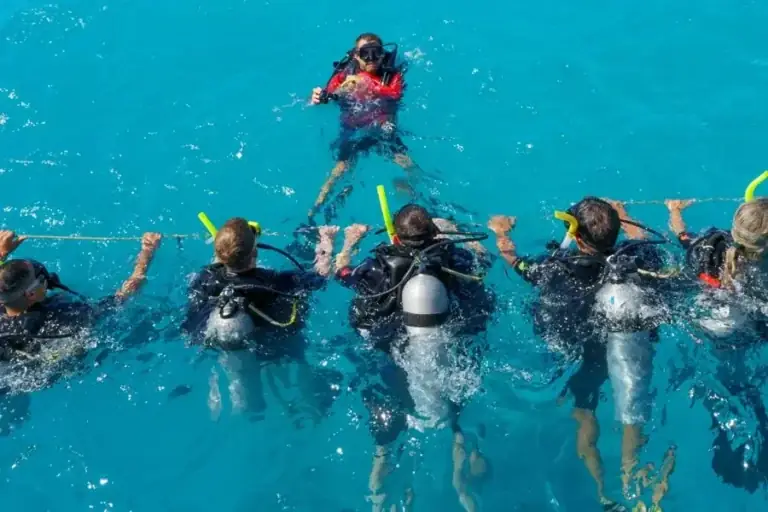
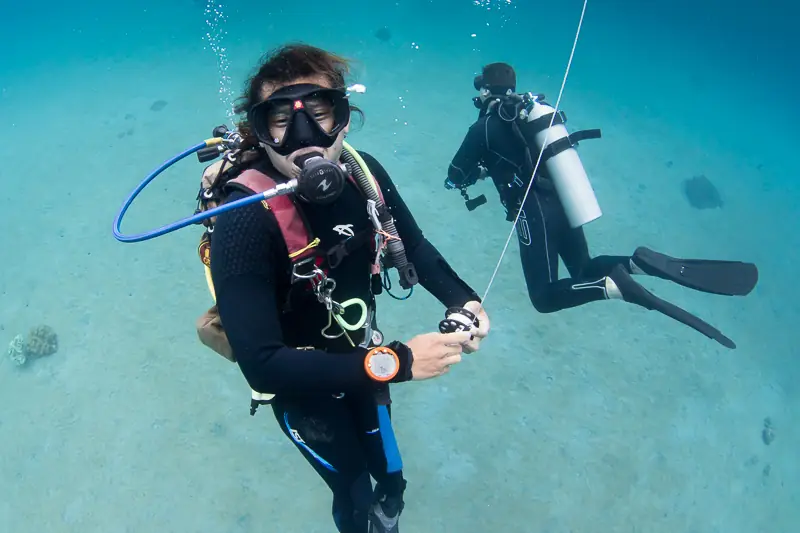
Drift currents require precise buoyancy control and streamlined gear placement to prevent excessive energy expenditure. Divers must descend rapidly along a fixed descent line to avoid missing the target reef. Maintaining close proximity to buddy pairs ensures mutual support if a separation occurs.
Low-Visibility Silt-Outs in Wrecks
Fine sediment disturbed inside shipwrecks can instantly reduce visibility to zero. Panic during a silt-out accelerates air consumption and spatial disorientation. Divers must immediately halt movement, deploy touch-contact communication, and follow established guide lines out of the hazard zone.
Managing Thermal Shock in Cold Thermoclines
Deep water layers often feature dramatic temperature drops that can induce cold shock or shivering. Inadequate thermal protection leads to cognitive impairment and accelerated physical fatigue. Pre-dive equipment checks must include verified drysuit inflation systems or high-grade wetsuit seals.
Planning, Cost, and Resource Dynamics
Direct and Indirect Equipment Investments
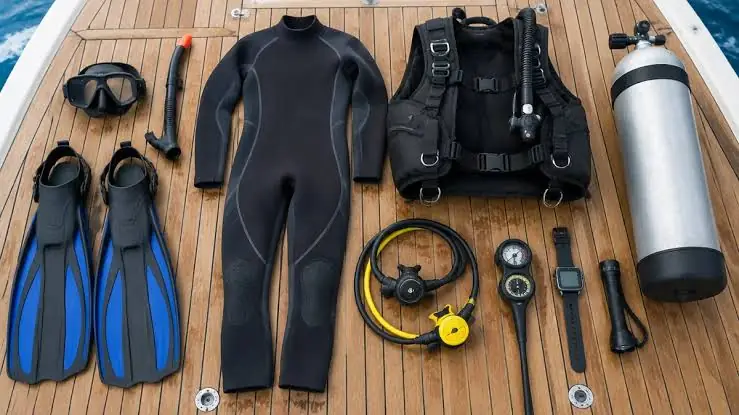
Equipping a dedicated diver involves substantial capital outlays for regulators, computers, exposure suits, and cylinders. Regular annual servicing adds ongoing maintenance costs. Proper upkeep protects critical life-support mechanisms from corrosion and mechanical failure.
Opportunity Costs and Logistical Planning
Travel logistics, boat charters, and gas fills consume significant time and financial resources. Weather dependencies introduce schedule volatility that requires flexible planning. A well-designed scuba diving guide accounts for these logistical variables to minimize operational disruptions.
Tools, Strategies, and Support Systems
Essential Life-Support Hardware
Reliable equipment forms the bedrock of subaquatic safety. Regulators must deliver consistent airflow regardless of cylinder pressure or depth. Buoyancy compensators provide stable surface flotation and precise neutral buoyancy underwater.
Instrumentation and Redundancy
Digital dive computers monitor nitrogen loading, ascent speeds, and remaining bottom time in real time. Redundant air sources, such as pony bottles or independent manifolds, provide vital backup in primary gas-failure scenarios. Surface marker buoys allow boat crews to track drifting divers effectively.
Risk Landscape and Failure Modes
Barotrauma and Pressure Injuries
Failure to equalize middle ear spaces during descent causes tympanic membrane rupture or sinus squeeze. Conversely, holding one’s breath during ascent traps expanding air in the lungs, risking pulmonary overexpansion injury. Controlled exhalation prevents catastrophic lung tissue damage.
Gas Toxicity and Narcosis
Nitrogen narcosis impairs cognitive function and judgment at depth, mimicking alcohol intoxication. Breathing high-pressure oxygen causes central nervous system toxicity, resulting in sudden convulsions. Strict adherence to maximum operating depths prevents these hazardous physiological reactions.
Governance, Maintenance, and Long-Term Adaptation
Inspection Protocols and Servicing Cycles
Life-support equipment demands rigorous preventative maintenance. Regulators are overhauled annually by certified technicians. Cylinders undergo visual inspections annually and hydrostatic pressure testing every few years to comply with safety regulations.
Pre-Dive Safety Checks
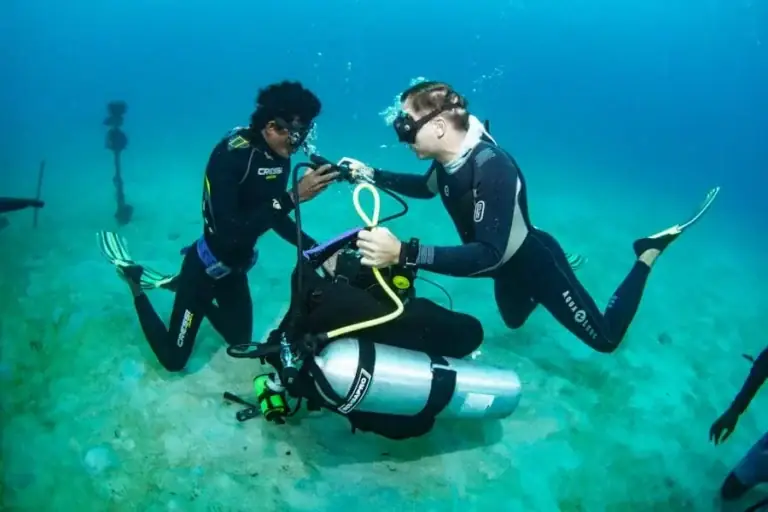
Standardized protocols ensure gear integrity before every submersed entry. The acronym BWRAE (Beginner With Review And Evaluate, or traditional variations like Begin With Review And Examine) guides systematic checks of buoyancy, weights, releases, air, and final equipment state. Adhering to this routine prevents preventable operational oversights.
Pre-Dive Verification Checklist
-
Buoyancy Compensator: Verify inflator hose connection and deflation exhaust valves.
-
Weights: Confirm secure quick-release buckle placement and proper weight distribution.
-
Releases: Check all harness buckles, cylinder bands, and accessory attachments.
-
Air: Breathe from the primary second stage while monitoring submersible pressure gauge drops.
-
Equipment: Ensure dive computer activation, mask clarity, and fin security.
Measurement, Tracking, and Evaluation
Quantitative Performance Metrics
Tracking surface air consumption (SAC) rates allows divers to predict gas depletion curves accurately. Logbook entries record maximum depth, bottom time, water temperature, and ballast weight. Reviewing these metrics enhances physiological awareness across diverse conditions.
Qualitative Environmental Assessment
Evaluating water clarity, surge intensity, and marine life behavior improves situational awareness. Documenting site-specific challenges refines future dive planning and risk mitigation strategies. Consistent evaluation fosters continuous professional growth.
Common Misconceptions and Oversimplifications
The Myth of Breath-Holding with Compressed Air
Novices often assume that holding breath underwater conserves air supply. In reality, trapped lung air expands during ascent and causes severe lung damage. Continuous breathing must be maintained whenever submersed with compressed gas systems.
Misunderstandings Regarding Shark Behavior
Popular media frequently portrays sharks as aggressive predators targeting divers. Scientific observation confirms that most marine species ignore divers unless provoked or habituated by illegal feeding practices. Respectful observation ensures peaceful coexistence underwater.
Ethical, Practical, and Contextual Considerations
Marine Conservation and Reef Preservation
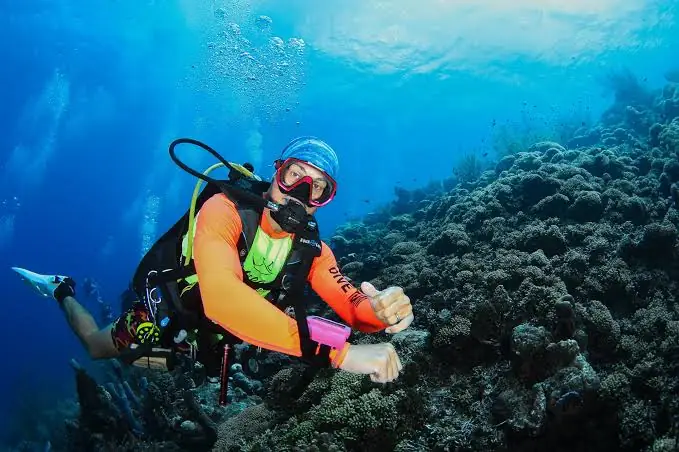
Careless fin kicks and accidental contact destroy fragile coral formations that require decades to grow. Responsible divers maintain strict buoyancy control to hover clear of delicate benthic organisms. Furthermore, collecting souvenirs or harassing marine life disrupts fragile aquatic ecosystems.
Environmental Stewardship
Sustainable diving practices extend beyond the immediate dive site. Reducing single-use plastics and supporting marine protected areas preserves aquatic habitats for future generations. Ethical operators prioritize eco-friendly anchoring and waste management policies.
Conclusion
Underwater exploration rewards preparation, technical discipline, and intellectual humility. The hydrosphere remains an unforgiving domain that brooks no operational shortcuts. By integrating physiological principles, equipment mastery, and risk management frameworks, practitioners achieve sustained safety and competence. Ultimately, this foundational scuba diving guide emphasizes that true expertise stems from continuous learning, methodical planning, and profound respect for the aquatic world.