Top Scuba Diving Training Options: Complete Certification & Skill Analysis
Life support underwater demands rigorous training, physical awareness, and disciplined risk management. Diver education spans a broad spectrum, ranging from basic entry-level resort courses to multi-year technical decompression programs. Selecting an appropriate educational pathway requires understanding agency standards, local water conditions, and physical constraints. Student success relies heavily on aligning training choices with long-term diving goals.
Course structures vary considerably across different training organizations and geographic regions. One school may focus on rapid certification for vacationers in warm waters. Another facility might emphasize rigorous buoyancy control, heavy thermal wear, and complex gas management in cold coastal settings. Consequently, prospective divers must evaluate how course pacing, pool practice time, and instructor experience affect underwater safety.
Evaluating diver education requires looking beyond promotional agency materials to examine actual skill outcomes. Trim control, gas consumption rates, surface marker buoy deployment, and stress management form the foundation of competent diving. When students prioritize mastery over quick certification, they build confidence, protect marine environments, and lower operational risk.
H2: Top Scuba Diving Training Options
Agency Philosophies and Core Methodologies
Evaluating top scuba diving training options requires analyzing agency philosophies rather than relying on brand popularity. Major training organizations operate under the World Scuba Training Council (WRSTC) minimum standards, yet their teaching methods differ. Certain agencies prioritize mass-market accessibility by breaking skills into modular online steps. Other organizations use standardized gear configurations and strict team protocols right from initial pool sessions.
These methodological differences shape how students learn core skills. Flexible modular courses allow students to complete knowledge development at their own pace, making them popular for vacation travel. Standardized team-focused programs require specific harness configurations, precise horizontal trim, and non-silting propulsion before open-water entries. Understanding these differences helps students select a training environment that matches their learning style.
Misinterpretations of Certification Badges
A common misunderstanding in dive education is treating certification cards as proof of complete underwater mastery. A card simply shows that a student met minimum agency requirements on a specific date in a specific environment. A diver certified in warm, clear Caribbean waters may struggle when facing cold water, heavy currents, or poor visibility.
True competence develops through varied experience, deliberate practice, and continued mentorship after formal courses end. Relying solely on certification levels can create false confidence, leading divers into conditions beyond their real capabilities. Students should view certifications as permits to gain specific experience under controlled conditions rather than absolute proof of mastery.
Historical and Contextual Background of Diving Instruction
From Military Roots to Commercial Standardization
Early scuba instruction grew out of military frogman units and scientific exploration teams during the mid-twentieth century. Early courses focused heavily on physical conditioning, watermanship tests, and emergency equipment recovery. Students spent weeks in pools mastering gear assembly, buddy breathing, and heavy physical drills before entering open water.
During the late 1960s and 1970s, the growth of recreational diving led to standardized teaching methods. Training agencies created structured manuals, visual aids, and clear performance requirements to make instruction safer and more consistent. This shift opened diving to a broader public, though it reduced the heavy physical focus of earlier military-style courses.
The Digital Shift and Modern Skill Gaps
Digital learning tools transformed diver education over the past two decades. Online learning replaced traditional classroom lectures, allowing students to complete academic modules before stepping into a dive shop. While digital learning offers convenience, it places greater responsibility on instructors to connect theoretical concepts with practical pool drills.
This shift has sometimes created gaps between theoretical knowledge and practical pool execution. Students may score high on digital exams while struggling with basic skills like mask clearing, weight positioning, or gas calculations. Addressing these gaps requires dedicated pool time where instructors emphasize muscle memory, physical coordination, and real-time problem-solving.
Conceptual Frameworks and Mental Models
The Buoyancy-Trim-Propulsion Triad
Mastering underwater movement relies on three interconnected elements: buoyancy control, body trim, and propulsion technique. Buoyancy management uses lung volume and air adjustments in the buoyancy compensator (BCD) to maintain neutral positioning. Trim refers to holding a flat, horizontal posture that lowers water resistance and keeps fins away from fragile bottom sediment.
Propulsion techniques use specialized fin kicks, such as the frog kick or modified flutter kick, to move efficiently without disturbing the seabed. Deficiencies in any single element disrupt the entire system. A diver with poor trim must constantly kick upward to maintain depth, causing rapid gas consumption and early fatigue.
The Cognitive Load Continuum
Undersea environments introduce sensory inputs that strain a diver’s mental processing capacity. The Cognitive Load Continuum maps mental stress from low-demand settings to high-task technical environments. Novice divers spend significant mental energy managing basic mechanics like breathing rhythm, mask clearing, and depth tracking.
As fundamental skills become automatic through practice, cognitive capacity opens up for environmental awareness, buddy tracking, and navigation. If task load rises faster than skill mastery, stress can build quickly, increasing panic risks. Training progressions must raise environmental complexity gradually to keep mental load within safe limits.
The Gas Management Risk Matrix
Managing breathing gas requires calculating supply reserves against depth, workload, and ascent requirements. The Gas Management Risk Matrix compares available gas volumes against critical return thresholds like Minimum Gas or Rock Bottom calculations. Minimum gas provides enough breathing volume for two divers to make a safe, controlled ascent while sharing air from maximum depth.
Relying on low-pressure tank warnings or arbitrary reserve pressure rules ignores how depth and stress raise gas use during emergencies. Proper training teaches students to calculate gas consumption rates based on personal surface air consumption (SAC) metrics. Applying these calculations ensures divers maintain safe gas margins across every phase of the dive.
Key Categories of Diver Training Pathways
Entry-Level Open Water Programs
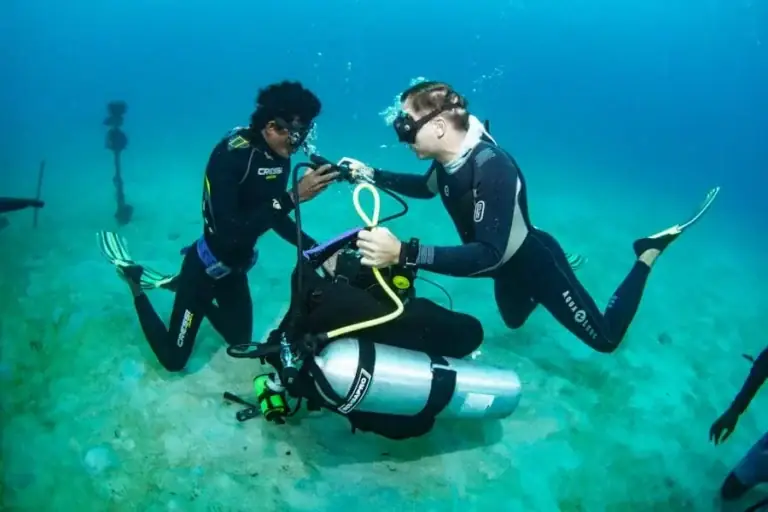
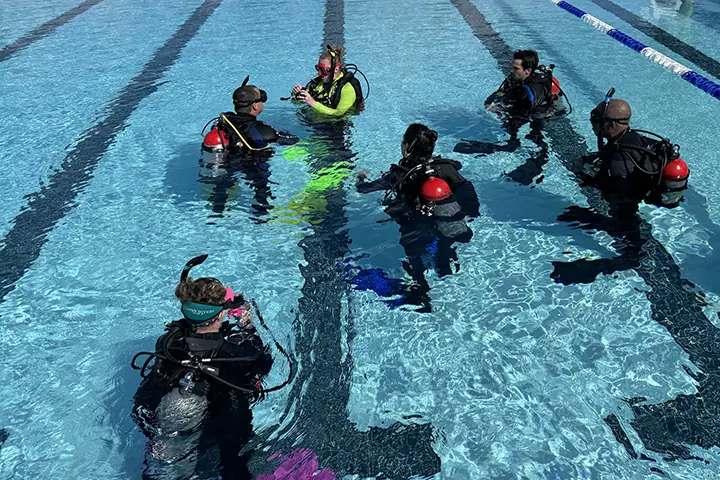
The Open Water Diver course serves as the foundation for all future recreational scuba training. Students complete academic modules, confined water pool sessions, and four open-water checkout dives to earn certification. Key skills include regulator retrieval, mask clearing, buoyancy control, out-of-air drills, and controlled ascents.
Quality variations at this level stem from student-to-instructor ratios, pool practice time, and weight positioning methods. Programs that conduct pool training in flat horizontal trim build better habits than those allowing students to kneel on pool bottoms. Establishing strong fundamentals early prevents bad habits that can be difficult to correct later.
Advanced and Specialty Continuations
Advanced programs expand operational boundaries by introducing deeper depths, underwater navigation, and specialized environmental conditions. Rather than focusing on repetitive pool drills, these courses use guided open-water dives to build practical experience under instructor supervision.
Specialty courses target specific operational skills, such as Enriched Air Nitrox, night diving, deep navigation, or wreck exploration. Nitrox training is particularly useful, teaching students to use oxygen-enriched gas blends to extend non-decompression limits at moderate depths.
Rescue and Emergency Response Tracks
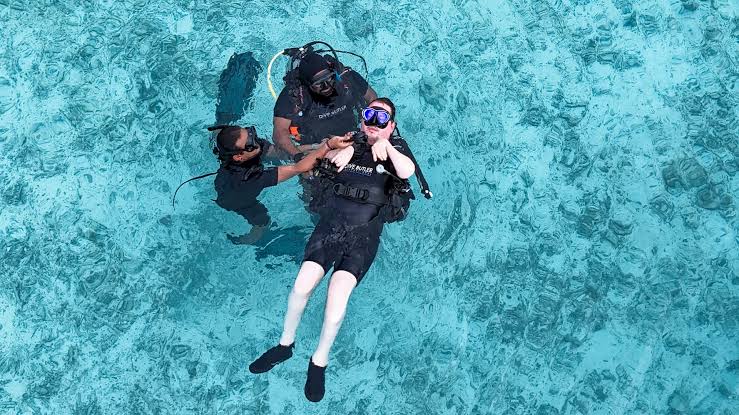
Rescue Diver courses mark a major shift from self-focused skill building to team awareness and emergency response. Students learn to recognize diver stress, manage panicked behaviors, handle unconscious diver recoveries, and coordinate surface CPR and oxygen delivery.
This training challenges physical stamina and mental problem-solving under simulated emergency stress. Divers learn to manage unexpected situations calmly while keeping themselves safe. Many experienced divers view the rescue track as the most valuable recreational course for building true confidence.
Technical Decompression Foundations
Technical diving options expand access beyond traditional non-decompression limits, requiring planned stage stops during ascent. Decompression foundation courses focus on precise buoyancy control, redundant gear setups, gas switching protocols, and complex decompression math.
Students use twin cylinders or sidemount configurations with separate regulators to ensure complete gear redundancy. Training stresses precise trim control, as losing depth discipline during mandatory decompression stops can cause severe physiological harm.
Overhead Cave and Mine Programs
Overhead cave and mine programs prepare divers for environments where direct vertical ascents to the surface are impossible. Training covers reel and guideline navigation, zero-visibility exits, light failure responses, and gas management using the Rule of Thirds.
Silt management is critical in cave environments, as improper fin kicks can instantly drop visibility to zero. Cave training enforces strict discipline, requiring physical emotional control and unwavering adherence to team safety rules.
Rebreather and Closed-Circuit Systems
Closed-Circuit Rebreather (CCR) training transitions divers from open-circuit equipment to systems that recycle exhaled breathing gas. CCRs absorb carbon dioxide chemically while adding small amounts of oxygen to maintain a constant partial pressure (PPO2PPO_2).
This technology extends gas endurance and reduces noise underwater, making it popular for deep exploration and marine life interactions. However, CCR systems require meticulous pre-dive assembly checks, continuous sensor monitoring, and strict fault-finding routines.
Comparative Overview of Training Pathways
Decision Logic for Selecting Training Pathways
Selecting among top scuba diving training options requires matching personal experience levels with long-term goals and environmental realities:
Detailed Real-World Scenarios and Constraints
The Cold-Water Local Diver Progression
A student learning in Pacific Northwest or North Atlantic waters faces low water temperatures, shifting currents, and limited underwater visibility. Heavy neoprene wetsuits or drysuits require extra lead weight, complicating buoyancy control and trim adjustment.
Learning in these demanding conditions slows initial progress but builds strong core watermanship skills. Mastering buoyancy in a drysuit while handling heavy thermal gloves creates resilient, adaptable divers. These skills transfer easily to warmer, clearer waters around the world.
The Warm-Water Vacationer Transitioning to Local Waters
Divers who earn certifications in warm, clear tropical waters often experience culture shock when entering colder local sites. Thicker wetsuits, heavier weights, and lower visibility can create unexpected stress and task overload.
Transitioning safely requires taking orientation dives with a local professional. These guided sessions help divers adjust weight balance, practice navigation in low visibility, and learn local entry and exit procedures before diving independently.
The Fast-Track Zero-to-Hero Career Attempt
Accelerated “zero-to-hero” programs promise to take students from complete novices to certified instructors in just a few months. While these intensive tracks cover formal requirements quickly, students often lack real-world experience across varied dive environments.
Instructors trained through accelerated programs may struggle when managing unpredicted student panic, equipment failures, or extreme weather shifts. Gaining diverse experience across different dive sites, seasons, and entry methods is essential for developing safe, adaptable dive leaders.
The Experienced Recreational Diver Crossing to Technical Foundations
An experienced recreational diver with hundreds of logged dives may encounter unexpected challenges when entering technical training courses. Years of instinctive recreational habits, such as upright body trim or casual buoyancy adjustments, must often be unlearned.
Technical courses require precise horizontal trim, static hover stability, and structured team communications. Overcoming ingrained habits demands patience, humility, and a willingness to rebuild core skills from the ground up.
Planning, Cost, and Resource Dynamics
Direct Costs vs. Hidden Gear Commitments
Evaluating course costs requires looking beyond initial tuition fees to understand the full financial commitment. Advertised course prices frequently exclude gear rentals, gas fills, pool fees, marine park passes, and certification processing charges.
Advanced and technical courses also require specialized personal gear, such as primary lights, backplates, harnesses, cutting tools, and dive computers. Identifying these additional costs early prevents budget surprises and helps students plan equipment investments wisely.
Targeting high-quality initial instruction reduces long-term costs by avoiding remedial training down the road. Investing in solid foundational skills keeps gear purchases aligned with actual needs as diving goals evolve.
Opportunity Costs of Condensed Courses
Choosing short, two-day certification courses saves time during vacations but limits skill practice and muscle memory development. Condensed timelines give students less opportunity to practice core skills, process academic concepts, or handle unexpected challenges under supervision.
Pacing training over several weeks allows students to digest information, practice pool drills, and build physical comfort in the water. The extra time spent pays off in higher confidence, better skill retention, and safer overall diving habits.
Tools, Strategies, and Support Systems
Instructor Evaluation Frameworks
The quality of dive training depends more on the individual instructor than the logo on the certification card. Evaluating an instructor requires assessing their experience, teaching philosophy, and commitment to active skill mastery.
Top instructors encourage students to practice skills while hovering neutrally rather than kneeling on pool floors. They keep class sizes small, allow adequate practice time, and emphasize real-world problem-solving over speed.
Pool and Confined Water Environment Assessment
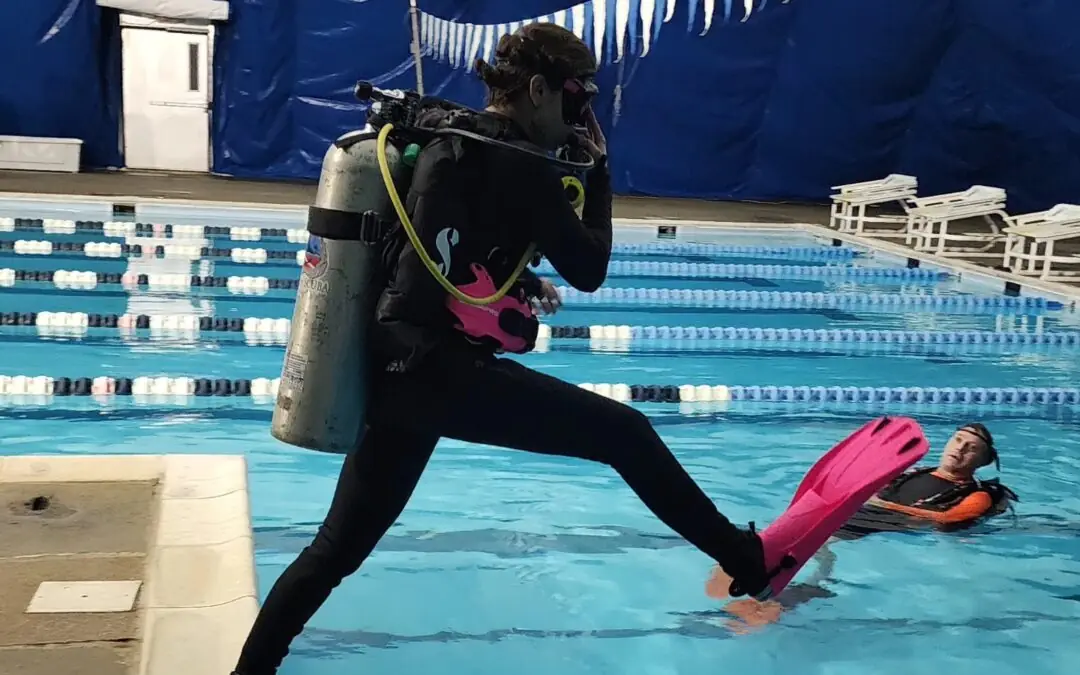
The facility used for confined water training directly affects skill development. Deep pools with clean, clear water allow students to practice buoyancy control, ascent mechanics, and trim positioning effectively.
Shallow pools that limit water depth to chest level force students to perform skills while kneeling. Seeking out facilities with deep-water access ensures students can practice true neutral buoyancy before moving to open water.
Video Feedback and Self-Analysis
Using underwater video feedback accelerates skill learning by showing students their actual position and movement in the water. Students often believe they are holding a flat horizontal posture when their legs are actually dragging low.
Reviewing video clips with an instructor clarifies adjustments needed for trim, buoyancy, and finning style. Visual feedback fixes form issues quickly, building better muscle memory during pool practice.
Risk Landscape and Failure Modes
Normalizing Deviance in Skill Execution
Normalizing deviance occurs when divers skip safety steps without facing immediate negative consequences, gradually treating unsafe habits as normal. Examples include skipping buddy checks, ignoring gas reserve targets, or diving with poorly maintained equipment.
Over time, accepting small errors lowers overall safety margins until a minor issue triggers a serious emergency underwater. Rigorous training combats this tendency by instilling consistent pre-dive safety routines and strict gear management habits.
Over-Reliance on Automated Dive Computers
Modern dive computers simplify dive tracking by displaying real-time depth, bottom time, and ascent rate data on easy-to-read screens. However, relying entirely on electronics without understanding basic decompression theory can create vulnerabilities if devices fail.
Quality training programs teach students to maintain manual back-up plans using slate tables, depth gauges, and timers. Understanding underlying dive tables ensures students can manage ascents safely even if electronic devices fail.
Governance, Maintenance, and Long-Term Adaptation
Pre-Course Physical and Skills Audits
Preparing for advanced training requires assessing physical fitness, cardiovascular health, and core skill readiness. Completing medical screenings identifies underlying respiratory or cardiac conditions before entering demanding training environments.
Auditing basic skills in a local pool before starting advanced courses identifies areas needing practice. Refreshing mask clears, hover stability, and out-of-air responses ensures students start advanced classes with solid foundational habits.
Post-Certification Refinement Cycles
Learning continues long after earning a new certification card. Establishing post-course practice cycles helps divers consolidate new skills through deliberate, low-stress practice sessions.
Diving with experienced mentors or participating in local club events provides ongoing feedback and keeps skills sharp. Treating every dive as an opportunity to refine buoyancy, trim, and gas efficiency builds long-term competence.
Measurement, Tracking, and Evaluation
Qualitative Indicators of Diver Competence
Assessing diver skill involves observing movement quality, composure, and environmental awareness underwater. Competent divers move smoothly through the water with minimal fin effort, maintaining steady horizontal trim throughout the dive.
Observing how a diver handles minor disruptions, such as a leaking mask or clear current, reveals true skill levels. Calm, measured reactions signal strong mental focus and skill mastery under real-world conditions.
Quantitative Skill Benchmarks
Quantitative metrics offer clear data to measure progress over time. Key measurements include Surface Air Consumption (SACSAC) rates, weighting accuracy, depth hold variance, and ascent rate control.
Tracking SACSAC rates across different water temperatures and depths shows improvements in relaxation and finning efficiency. Lower gas consumption rates and precise depth control reflect growing physical comfort and skill mastery underwater.
Common Misconceptions and Oversimplifications
Myth 1: The Most Popular Agency Offers the Best Quality Training
Major training organizations deliver standardized course frameworks, but overall quality depends on individual instructor expertise and pool practice time. Evaluating specific instructors yields better results than picking a course based on agency logos.
Myth 2: E-Learning Replaces Pool Practice Time
Digital learning covers academic theory efficiently, but cannot build physical coordination, water balance, or muscle memory. Pool practice remains the core foundation for learning physical skills like buoyancy control and emergency responses.
Myth 3: Advanced Open Water Certification Means You Are an Advanced Diver
The Advanced Open Water course offers supervised entry into deeper, more varied diving environments, but does not instantly create an expert diver. True advanced skill comes from building experience across different conditions over time.
Myth 4: You Must Buy a Full Set of Gear Before Your First Class
Buying basic personal items like a mask, snorkel, and fins makes sense early on, but purchasing regulators, BCDs, or drysuits should wait until you understand your long-term diving preferences. Renting different gear setups during initial training helps you make smarter purchases later.
Myth 5: Weighting Adjustments Only Matter for Beginners
Proper weighting directly impacts trim, gas consumption, and buoyancy control for divers at every experience level. Carrying excess lead forces you to add unnecessary air to your BCD, creating drag and making depth control more difficult.
Myth 6: Technical Diving Training Is Only for Deep Exploration
Technical training focuses on buoyancy precision, trim control, gas management, and team safety drills that benefit recreational divers as well. Learning these disciplined protocols improves overall safety even on shallow reef dives.
Ethical, Practical, and Contextual Considerations
Modern scuba training places strong emphasis on marine conservation and low-impact diving habits. Poor buoyancy control and sloppy fin kicks can break fragile corals and disrupt benthic habitats, damaging underwater environments.
Training programs that teach neutral buoyancy and non-silting kick methods help protect delicate marine ecosystems. Teaching students to respect marine life and maintain good spatial awareness builds an ethical foundation for lifetime diving.
Conclusion
Finding the top scuba diving training options requires matching personal goals against agency standards, instructor experience, and course environments. Whether starting with an entry-level Open Water class or advancing into technical decompression tracks, long-term success depends on building solid fundamental skills.
Prioritizing buoyancy control, horizontal trim, gas management, and team safety creates confident, adaptable divers. By choosing high-quality instruction and committing to continuous practice, divers can explore underwater environments safely and responsibly for years to come.